


Cone beam computed tomography (CBCT):
This technology uses X-rays to produce three-dimensional images and slices of the teeth and jaws. Also, it is used in the diagnosis and medical evaluation of diseases and health conditions concerning teeth and jaws. For example, evaluating jaw growth, locating cysts and abscesses, assessing the need for surgery, and placing dental implants in the jaws.
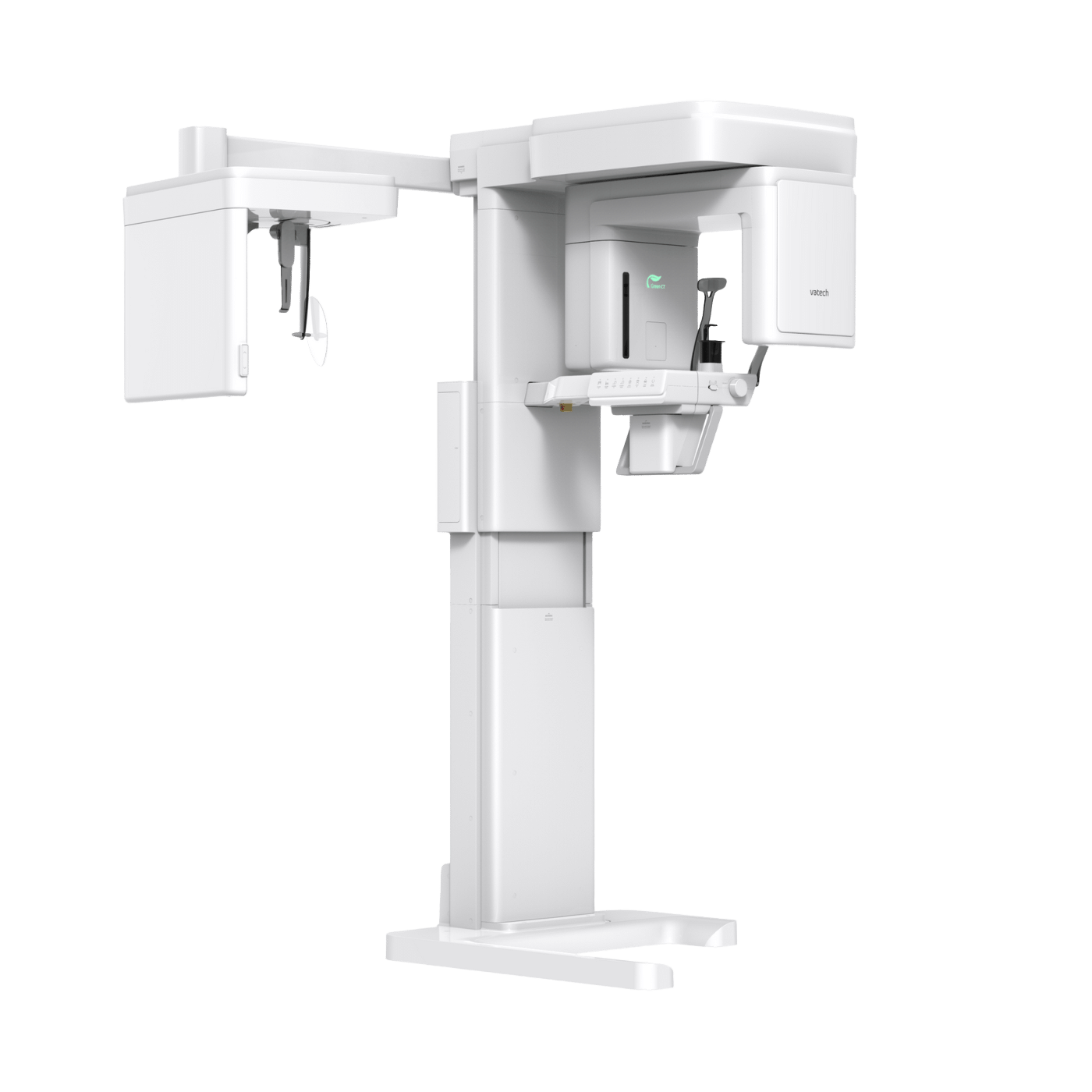
What sets our device apart?
- 49.5 µm Endo Mode : With its 4×4 cm volume mode and 49.5-micron voxel size, the Endo mode will optimize treatment of highly focused regions of interest. It is ideal for endodontic use because the dentist can achieve an extraordinary image in a high-resolution voxel size.
- AI segmentation : In today’s rapidly evolving dental field, AI is reshaping how professionals diagnose and plan treatments — and Vatech’s Ez3D-i software puts that power to work, enhancing speed, precision, and clinical confidence. Featuring AI-driven tools like automatic anatomical segmentation, intuitive two-click root canal tracing with precise length and diameter measurements for Endo procedures, and smart implant planning with crown mirroring, Ez3D-i helps doctors work more efficiently and deliver better patient outcomes.
- Mandibular Canal Drawing : Understanding the exact location and trajectory of the mandibular canal is critical for safe and effective treatment planning.
CBCT imaging procedure:
- The patient takes off the jewelry he wears before the imaging because it will affect the results of the imaging.
- The patient is placed in a specific location on the device.
- The device sends an X-ray beam to the patient's mouth.
- Images are taken at different angles of the teeth and jaw to create a three-dimensional image.
- The images are analyzed using specialized computer programs to create a three-dimensional model of the jaw and teeth.
- A comprehensive report is prepared on the patient's condition using the images, which can be used to diagnose diseases and treatment.